Buy lighz.com ?
We are moving the project
lighz.com .
Are you interested in purchasing the domain
lighz.com ?
domain@kv-gmbh.de · 0541-91531010
Buy lighz.com ?
Why does HDMI 2.0 only support 30Hz at 4k60Hz?
HDMI 2.0 supports 4k resolution at 60Hz, but only at 30Hz. This is because HDMI 2.0 has a limited bandwidth of 18Gbps, which is not sufficient to support 4k resolution at 60Hz. The higher the resolution and refresh rate, the more data needs to be transmitted, and HDMI 2.0 simply does not have the capacity to handle the increased data requirements at 60Hz. As a result, the maximum refresh rate for 4k resolution on HDMI 2.0 is limited to 30Hz. **
What does the refresh rate mean in computer monitors, for example 30Hz refresh rate?
The refresh rate in computer monitors, such as a 30Hz refresh rate, refers to the number of times per second the screen is able to update the image being displayed. A 30Hz refresh rate means that the screen can refresh the image 30 times in one second. A higher refresh rate, such as 60Hz or 144Hz, results in smoother motion and reduced motion blur, making it ideal for gaming or watching fast-paced videos. A lower refresh rate may lead to a less smooth viewing experience, especially during fast-moving scenes. **


Similar search terms for 30hz
Top-Angebote
Products related to 30hz:
-
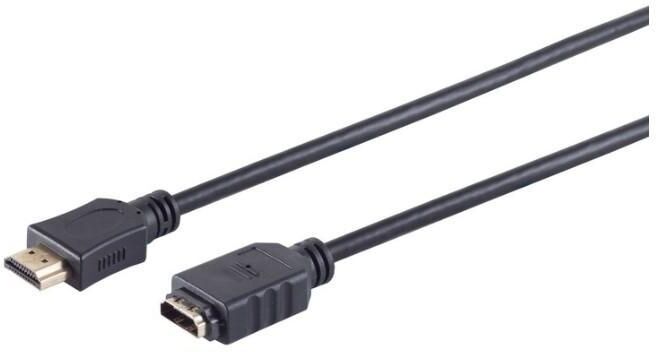
Manhattan High Speed HDMI Cable 1m, 4K@30Hz - BlackManhattan High Speed HDMI cable, HDMI male to HDMI male, 1 m, black. Supports Ultra HD 4K x 2K at 30 Hz and all 1080p/HD uses; fully shielded with gold-plated contacts and moulded connectors. Manhattan part number 308816 (equivalent to HDMM1M).16,49 £*Shipping: 0,00 £Secure redirect to the provider



-
What does the refresh rate mean for computer monitors, for example, a 30Hz refresh rate?
The refresh rate of a computer monitor refers to the number of times per second that the screen is able to update and display new images. A 30Hz refresh rate means that the monitor is capable of refreshing the display 30 times per second. A higher refresh rate, such as 60Hz or 144Hz, results in smoother and more fluid motion on the screen, which is particularly important for gaming and fast-paced video content. A lower refresh rate may lead to more noticeable flickering and motion blur, especially during fast movements on the screen. **
-
What are self-luminous bodies?
Self-luminous bodies are objects that emit their own light, as opposed to reflecting light from another source. Examples of self-luminous bodies include stars, the sun, and certain types of light bulbs. These objects generate their own energy through processes like nuclear fusion or electrical current, which produces light as a byproduct. **
-
Is the luminous clock radioactive?
No, the luminous clock is not radioactive. The luminescence in the clock is typically achieved using a phosphorescent material that absorbs light and then slowly releases it over time. This process does not involve any radioactive materials. The glow from the clock is simply a result of this light-absorption and emission process. **
-
What is a luminous point?
A luminous point is a theoretical concept used in physics and optics to represent a source of light that emits light in all directions. It is often used as a simplification in the study of light and its behavior, allowing for easier calculations and analysis. In reality, a luminous point does not exist as a physical object, but it is a useful tool for understanding the behavior of light in various systems. **


What is radiant energy?
Radiant energy is a type of energy that travels through space in the form of electromagnetic waves. It includes visible light, radio waves, microwaves, and other forms of electromagnetic radiation. Radiant energy is produced by the movement of charged particles and is essential for many natural processes, such as photosynthesis in plants and the warmth we feel from the sun. It is also used in various technologies, such as solar panels and communication devices. **
Why is the luminous intensity and not the luminous flux specified for reflector lamps?
The luminous intensity is specified for reflector lamps because it measures the amount of light emitted in a specific direction, which is important for directional lighting applications such as spotlights and floodlights. Reflectors are designed to control and direct light in a specific direction, so specifying luminous intensity helps to ensure that the lamp is suitable for its intended purpose. Luminous flux, on the other hand, measures the total amount of visible light emitted by a source in all directions, which may not be as relevant for reflector lamps where the focus is on directing light in a specific direction. **
Top-Angebote
Products related to 30hz:
-
MicroConnect MC-GEN-CH HDMI Video Capture Card (USB 2.0), 4K 30Hz Input / 1080p 30Hz Output, BlackMicroConnect MC-GEN-CH HDMI video capture card. Captures an HDMI source of up to 4K at 30Hz and outputs 1080p at 30Hz over USB 2.0. Suitable for recording, streaming, teaching and video acquisition. Black.35,49 £*Shipping: 0,00 £Secure redirect to the provider
-
StarTech DisplayPort 1.2 to HDMI Adapter 4K 30HzActive DisplayPort 1.2 to HDMI video converter supporting 4K resolution at 30Hz. Converts DisplayPort output from laptops and docking stations to HDMI for monitor displays. Backed by a 3-year warranty and operates reliably between 0°C and 70°C.36,49 £*Shipping: 0,00 £Secure redirect to the provider
-
Manhattan High Speed HDMI Cable 1m, 4K@30Hz - BlackManhattan High Speed HDMI cable, HDMI male to HDMI male, 1 m, black. Supports Ultra HD 4K x 2K at 30 Hz and all 1080p/HD uses; fully shielded with gold-plated contacts and moulded connectors. Manhattan part number 308816 (equivalent to HDMM1M).16,49 £*Shipping: 0,00 £Secure redirect to the provider
-
Why does HDMI 2.0 only support 30Hz at 4k60Hz?
HDMI 2.0 supports 4k resolution at 60Hz, but only at 30Hz. This is because HDMI 2.0 has a limited bandwidth of 18Gbps, which is not sufficient to support 4k resolution at 60Hz. The higher the resolution and refresh rate, the more data needs to be transmitted, and HDMI 2.0 simply does not have the capacity to handle the increased data requirements at 60Hz. As a result, the maximum refresh rate for 4k resolution on HDMI 2.0 is limited to 30Hz. **
-
What does the refresh rate mean in computer monitors, for example 30Hz refresh rate?
The refresh rate in computer monitors, such as a 30Hz refresh rate, refers to the number of times per second the screen is able to update the image being displayed. A 30Hz refresh rate means that the screen can refresh the image 30 times in one second. A higher refresh rate, such as 60Hz or 144Hz, results in smoother motion and reduced motion blur, making it ideal for gaming or watching fast-paced videos. A lower refresh rate may lead to a less smooth viewing experience, especially during fast-moving scenes. **
-
What does the refresh rate mean for computer monitors, for example, a 30Hz refresh rate?
The refresh rate of a computer monitor refers to the number of times per second that the screen is able to update and display new images. A 30Hz refresh rate means that the monitor is capable of refreshing the display 30 times per second. A higher refresh rate, such as 60Hz or 144Hz, results in smoother and more fluid motion on the screen, which is particularly important for gaming and fast-paced video content. A lower refresh rate may lead to more noticeable flickering and motion blur, especially during fast movements on the screen. **
-
What are self-luminous bodies?
Self-luminous bodies are objects that emit their own light, as opposed to reflecting light from another source. Examples of self-luminous bodies include stars, the sun, and certain types of light bulbs. These objects generate their own energy through processes like nuclear fusion or electrical current, which produces light as a byproduct. **
Similar search terms for 30hz
-
StarTech MDP2HDMM1MB Mini DisplayPort to HDMI Cable 4K 30Hz Black 1mConverter cable connecting Mini DisplayPort to HDMI with 1-meter length and built-in connectors. Supports 4K Ultra HD resolution with DisplayPort 1.2 compliance and HDCP/DPCP protection. Backed by a 3-year manufacturer warranty.26,49 £*Shipping: 0,00 £Secure redirect to the provider
-
Is the luminous clock radioactive?
No, the luminous clock is not radioactive. The luminescence in the clock is typically achieved using a phosphorescent material that absorbs light and then slowly releases it over time. This process does not involve any radioactive materials. The glow from the clock is simply a result of this light-absorption and emission process. **
-
What is a luminous point?
A luminous point is a theoretical concept used in physics and optics to represent a source of light that emits light in all directions. It is often used as a simplification in the study of light and its behavior, allowing for easier calculations and analysis. In reality, a luminous point does not exist as a physical object, but it is a useful tool for understanding the behavior of light in various systems. **
-
What is radiant energy?
Radiant energy is a type of energy that travels through space in the form of electromagnetic waves. It includes visible light, radio waves, microwaves, and other forms of electromagnetic radiation. Radiant energy is produced by the movement of charged particles and is essential for many natural processes, such as photosynthesis in plants and the warmth we feel from the sun. It is also used in various technologies, such as solar panels and communication devices. **
-
Why is the luminous intensity and not the luminous flux specified for reflector lamps?
The luminous intensity is specified for reflector lamps because it measures the amount of light emitted in a specific direction, which is important for directional lighting applications such as spotlights and floodlights. Reflectors are designed to control and direct light in a specific direction, so specifying luminous intensity helps to ensure that the lamp is suitable for its intended purpose. Luminous flux, on the other hand, measures the total amount of visible light emitted by a source in all directions, which may not be as relevant for reflector lamps where the focus is on directing light in a specific direction. **
* All prices are inclusive of VAT and, if applicable, plus shipping costs. The offer information is based on the details provided by the respective shop and is updated through automated processes. Real-time updates do not occur, so deviations can occur in individual cases. ** Note: Parts of this content were created by AI.